
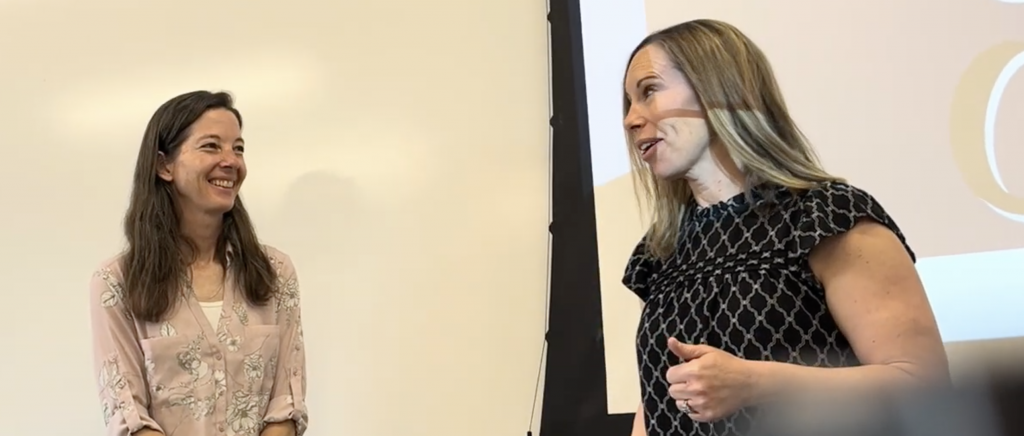
Completing a doctorate is a challenging and intensive journey on its own–and UCCS faculty/upcoming graduate Ida Wilding earned hers while also adjusting to a new learning environment.
The Department of Languages & Cultures teaching professor earned her bachelor’s degree in Communication Studies and master’s in Sign Language Education at Gallaudet University in Washington, D.C., the only university in the world dedicated to Deaf students. When pursuing her Ph.D. at UCCS, she was earning a degree in a different educational setting for the first time and is now the first Deaf individual to receive a doctoral degree from the UCCS campus.
“My previous education provided rigorous academic training alongside immersive, culturally grounded experiences that shaped my expertise in ASL (American Sign Language), Deaf culture, and language pedagogy,” said Ida. “While I greatly benefited from faculty who were responsive and supportive, my transition into a fully hearing classroom environment—an experience I had not previously encountered—was both challenging and transformative.”
“As a native ASL user, I am accustomed to accessing information in my first language, and functioning within an English-dominant academic setting required continuous linguistic and cognitive negotiation,” she continued. “This process ultimately strengthened my adaptability and deepened my academic engagement. I am also deeply appreciative of my cohort, whose support contributed to an inclusive and collaborative learning environment.”
Ida first joined UCCS after an invitation to teach ASL. The offer came while she was dealing with the aftermath of a personal tragedy and helped her settle on her next chapter.
“During a deeply difficult period in my life following my mother’s passing while I was living in Connecticut, I found myself searching for stability and direction,” shared Ida. “At that critical moment, UCCS offered me the opportunity to teach ASL, an opportunity that became a defining turning point. What began as a path forward quickly evolved into a profound sense of purpose, as I witnessed the impact of ASL on students’ growth, awareness, and connection to the Deaf community. That experience not only grounded me personally but also ignited an enduring commitment to ASL education, advocacy, and expanding access to language and culture for future generations.”
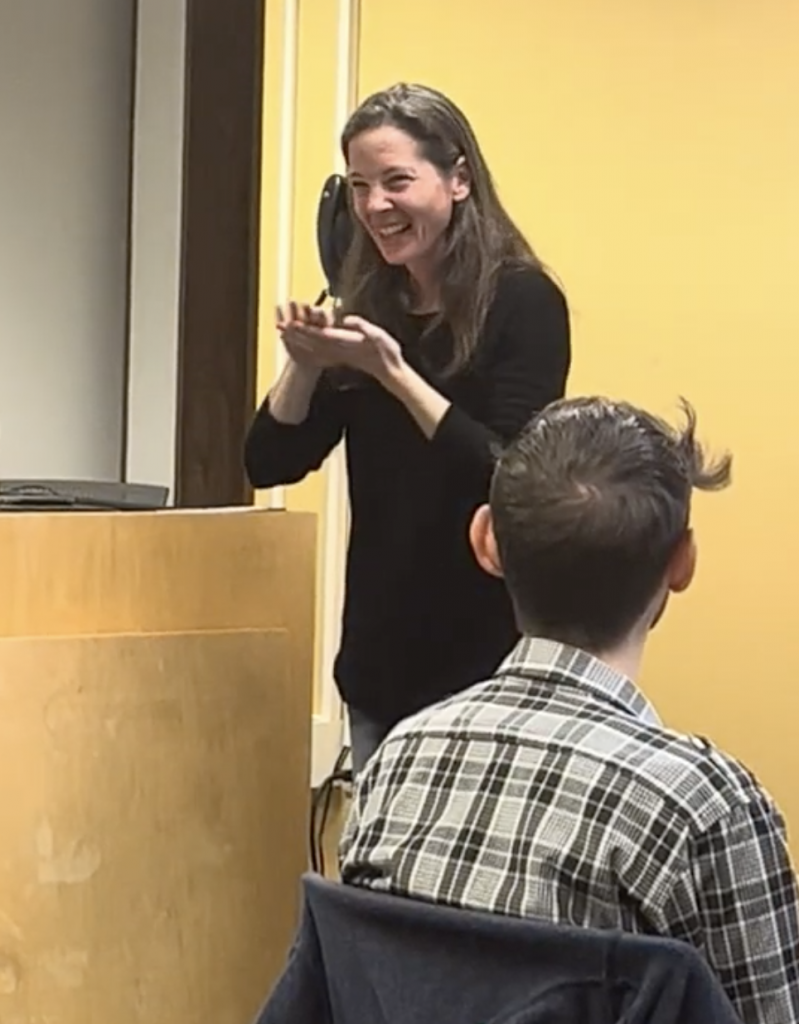
Alongside her role as a teaching professor, Ida is also the faculty sponsor for the ASL Club, Chair of the Board of Trustees for the Colorado School for the Deaf and the Blind and a board member for Deaf Overcoming Violence through Empowerment. After growing up in a large family with parents and siblings who are all Deaf, Ida became highly committed to serving the Deaf community and using her knowledge and skills to help advocate however she can.
“That environment provided me with full and natural access to ASL from birth, allowing me to fully engage with teachers, peers, and Deaf role models,” explained Ida. “However, my experience is not the norm; approximately 97% of Deaf children are born to hearing families, many of whom do not receive early access to ASL, often leading to significant developmental and social challenges. This contrast has deeply influenced my work and advocacy. I am committed to ensuring that parents of Deaf children understand that access to ASL empowers their children to thrive, not just survive.”
Ida’s doctoral dissertation, earned from the College of Education’s Educational Leadership, Research, and Policy program and entitled “The Rights Consciousness and Deaf Identity Development Among Deaf Adults Who Were Orally Mainstreamed,” not only adds to the literature of the field but also advocates for Deaf adults who are often overlooked when studying the impact of being raised and taught in a hearing environment.
“By centering Deaf adults’ retrospective insights, this study reveals how early language access and educational environments influence identity formation, advocacy, and wellbeing over time,” Ida said. “These findings provide critical guidance for advancing equitable, language-accessible educational systems that better support the long-term success of Deaf children.”
With her new degree, Ida is better poised to continue her goal of supporting that success and expanding the ASL program at UCCS.
“My long-term vision is to cultivate a thriving ASL ecosystem at UCCS and beyond, one in which both Deaf and hearing individuals regularly use ASL in everyday interactions, fostering access, inclusion, and meaningful connection across communities,” she said. “I am committed to transforming this vision into reality by expanding the ASL program at UCCS, strengthening its reach, and creating meaningful opportunities for students to engage with ASL, Deaf culture, and community.”
Though Ida will still be on campus with her doctorate program faculty, she said it won’t be quite the same as spending the time with them and her cohort the way she was able to during her studies.
“Their exceptional support, mentorship, and collaborative spirit were instrumental in my journey, and I am deeply grateful for those relationships,” said Ida. “I look forward to staying in touch and continuing those connections beyond the program.”
“My committee chair, Dr. Patty Witkowsky, has been instrumental in my success,” Ida added. “She was deeply committed to ensuring that I was fully supported and thoughtfully accommodated, demonstrating both professionalism and genuine care. Throughout this journey, she provided consistent guidance, encouragement, and mentorship, strengthening my confidence and academic growth. Her expertise and skill as a scholar and educator enabled me to engage with complex concepts in meaningful ways. I am profoundly grateful for her leadership and the lasting impact she has had on my development.”