
Laith Al-Shawaf, Ph.D., was recently appointed to the President’s Teaching Scholar Program (PTSP), a CU initiative made up of faculty of a variety of disciplines and from all four CU campuses. The program endorses excellence in teaching by honoring faculty throughout the university who excel and embody teaching, scholarship, creative work and research with excellence in all.
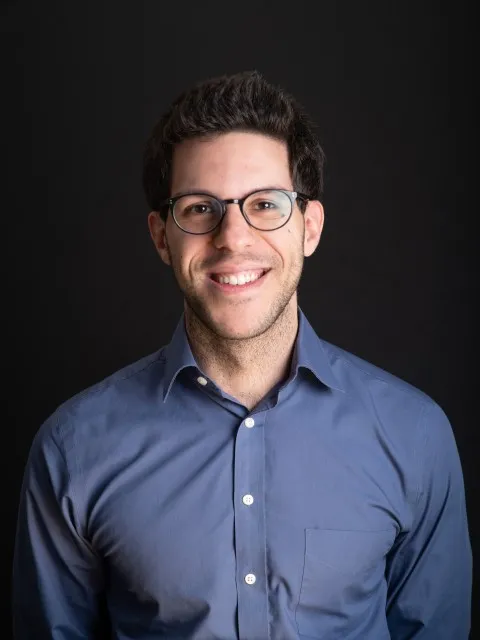
Al-Shawaf, Professor and Co-Director of Undergraduate Education in the Psychology department within the College of Letters, Arts & Sciences, focuses his research on emotion, cognition and personality psychology and is the director of the Architecture of the Mind Lab, which investigates the structure and function of mental systems and how they generate behavior.
“I hope this recognition contributes to a broader conversation about what it means to teach – and do – psychological science,” Al-Shawaf said. “Psychology is often presented as a collection of findings to be learned, but over the years, I’ve come to think one of the most valuable things we can teach students is how explanation and prediction work, how we assess what’s true, and why scientific inquiry is such a powerful engine of discovery and understanding. One of the most exciting moments in teaching is when students stop focusing on remembering specific findings and start asking why certain ideas succeed, where they fail, and how they might be improved. A major goal of mine is to help students think critically about how knowledge is built and how to develop deeper and more accurate explanations of the world.”
The President’s Teaching Scholar Program’s mission is accomplished by 1) honoring the accomplishments and community involvement of faculty dedicated to elevating teaching excellence across the CU system; 2) raising the awareness of and elevating the value of teaching as an integral purpose of higher education; 3) developing a community of scholars spanning the four campuses through annual meetings focused on sharing teaching expertise, experience, and purpose; 4) informing university leadership about issues concerning the current and future direction of the teaching mission and providing perspective and recommendations about particular actions, topics, or policies that influence teaching across the CU system; 5) supporting initiatives and research that advance teaching excellence across disciplines, and 6) serving as a resource for the advancement of the quality of teaching and learning.
Al-Shawaf noted how helping students in their studies is a rewarding part of his job, and how collaboration is key in teaching and his work.
“One of the things I enjoy most about teaching is helping students see the scientific process in action,” he said. “For me, teaching is about more than just sharing specific findings or theories in psychology – it’s about helping students understand how psychological knowledge is built, tested, challenged, and improved. In both the lab and the classroom, my goal is to help students develop intellectual tools that extend far beyond any single course or topic. For some students, that journey leads to scientific careers. For others, it leads to a deeper understanding of how evidence, reasoning, and explanation work. Both outcomes matter.”
“Teaching is always collaborative, and I’ve benefited from so many people in this regard,” Al-Shawaf added. “The outstanding students, colleagues, and communities of scholars I’ve worked with have continually sharpened my own thinking. My graduate and undergraduate students in the Architecture of the Mind Lab at UCCS have been key in this process. By working together on complex problems, they challenge me to keep refining how I teach, communicate, and mentor. I’ve also benefited greatly from interdisciplinary collaborations at UCCS and through international organizations such as the Arab-German Young Academy (AGYA) and the Human Behavior and Evolution Society (HBES), which have reinforced my view of science as both a scholarly and a public-facing endeavor.”
Al-Shawaf received his Ph.D. in psychology from The University of Texas at Austin, with additional training in biology, anthropology, and animal behavior, as well as a formal concentration in applied statistical modeling. Before that, he grew up in Lebanon and completed his undergraduate studies at the American University of Beirut as a full Merit Scholar, studying psychology and philosophy and minoring in cognitive science. He has received several awards and honors in addition to his appointment to the PTSP, has published dozens of articles across multiple journals and platforms and hopes his work helps encourages others within his field.
“I hope my work helps students develop the intellectual independence to become thoughtful scholars, critical consumers of evidence, and people who contribute to our understanding of how the mind works,” said Al-Shawaf. “More broadly, I hope it encourages everybody, including those who don’t go on to careers in science, to develop a deeper appreciation for scientific reasoning, conceptual clarity, and the structure of good explanations. Whether students go on to research careers, clinical practice, public scholarship, or entirely different paths, I hope they leave with habits of thinking that help them understand the world more clearly and contribute to it thoughtfully.”