
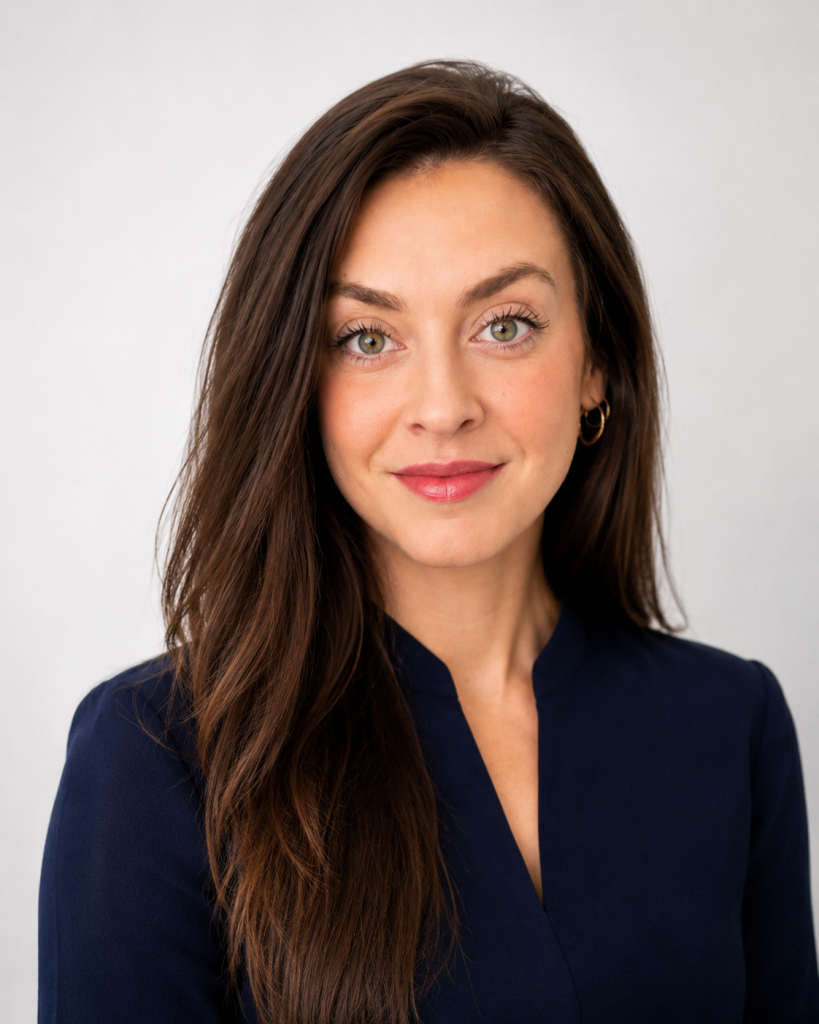
Licensed clinical psychologist Ashley Hahn, Psy.D., has recently joined UCCS and the Aging Center as the Aging Center Director and Psychology Assistant Professor, bringing with her an extensive background in clinical leadership, behavioral health, program development, workforce training and community partnerships.
Hahn’s experience includes working at the intersection of clinical services, education and community impact, and she is particularly interested in building strong partnerships, developing innovative programs and creating systems that improve quality of life at both the individual and community level.
“I was drawn to UCCS because of the Aging Center’s unique ability to connect clinical services, student training, research, and community engagement in one place,” Hahn said. “My work has focused on supporting individuals and families with complex needs across the lifespan while developing systems that improve access to care, strengthen community support, and promote long-term well-being.”
Hahn hopes to continue growing the Aging Center as a hub for healthy aging, strengthening partnerships across campus and throughout the community, expanding opportunities for students, supporting caregivers and older adults and identifying innovative approaches that improve access to resources and services. The collaborative nature of UCCS is another area of opportunity she is excited for.
“One of the things I enjoy most is finding unexpected connections between people, programs, and ideas,” said Hahn. “Even in my first weeks at UCCS, I’ve been inspired by the number of opportunities to bring together students, faculty, community partners, caregivers, and older adults in ways that create meaningful impact.”
“Healthy aging is about far more than healthcare,” she added. “It is also about purpose, connection, belonging, and creating opportunities for people to remain engaged in the things that matter most to them. I believe the future of healthy aging will depend on strong partnerships between universities, healthcare organizations, community groups, caregivers, students, and older adults themselves. I am excited to continue building those relationships and exploring new ways to support lifelong health, learning, purpose, and community engagement.”