
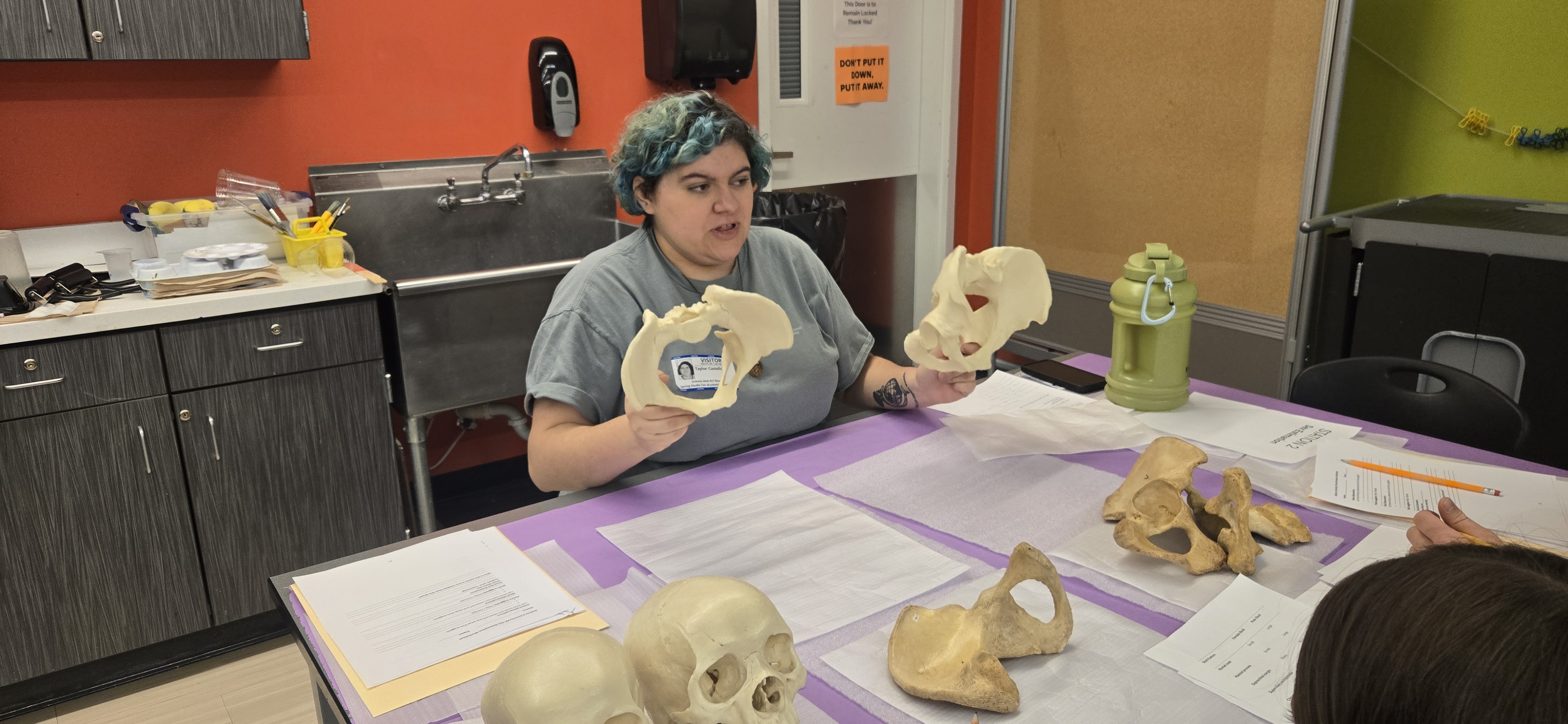
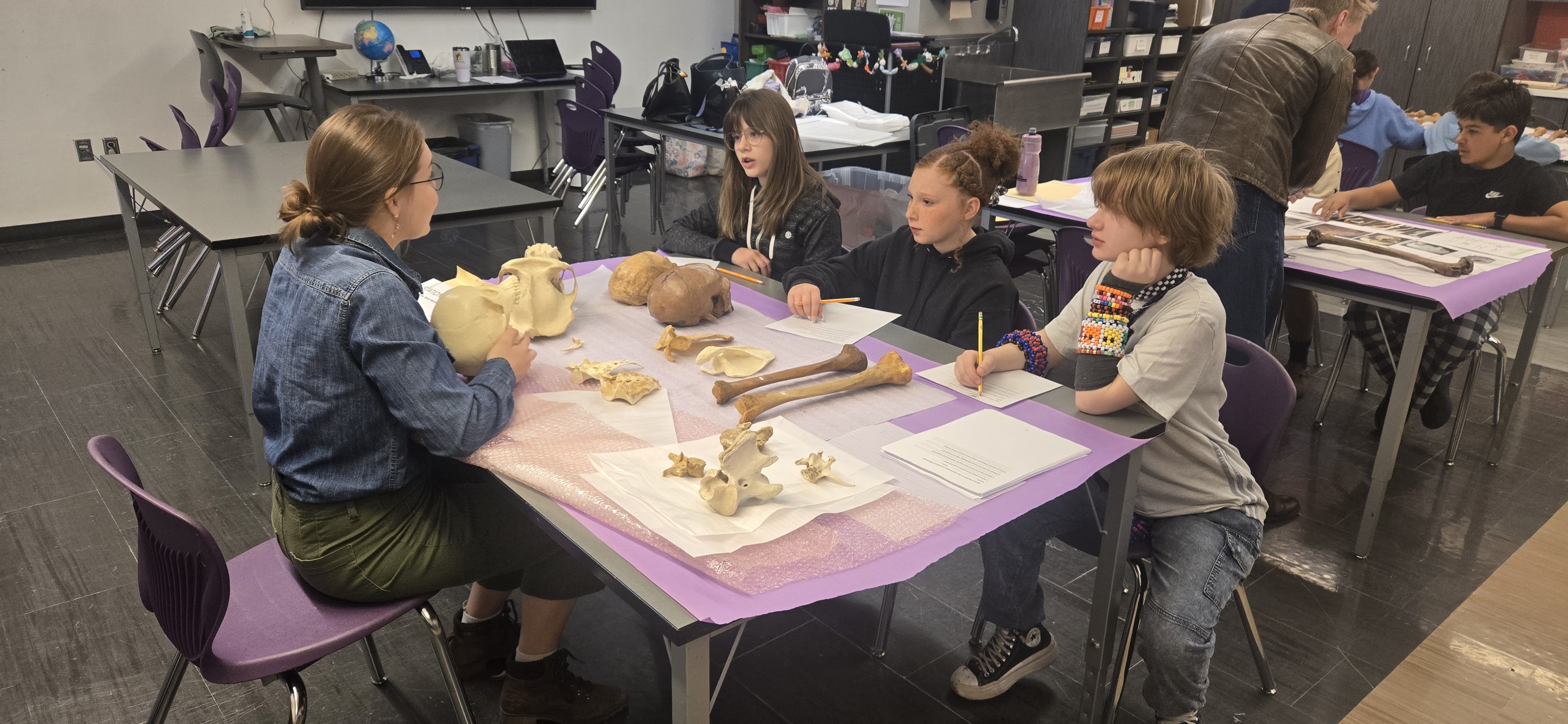
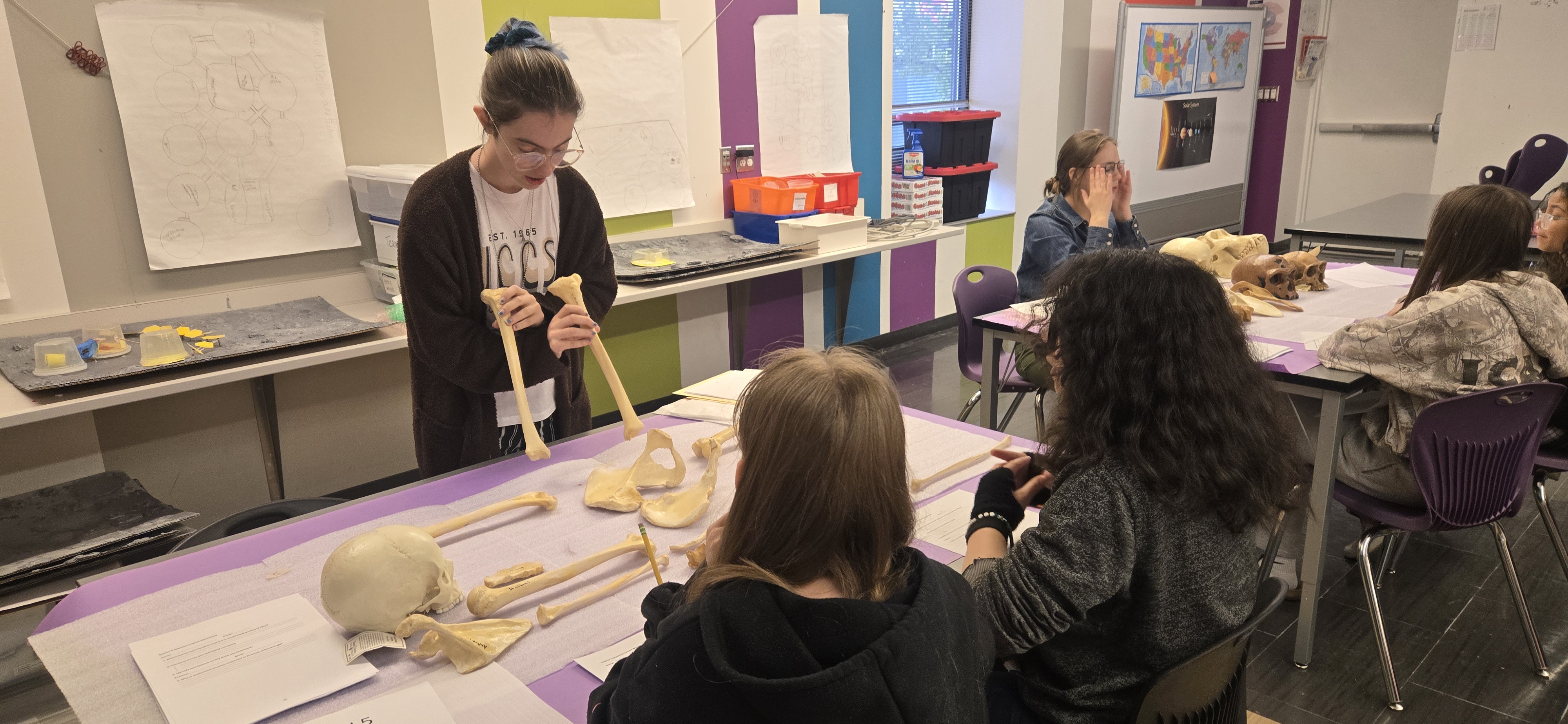


The UCCS Department of Anthropology recently brought a unique, two-day Anthropology Day program to students at Springs Studio for Academic Excellence in Colorado Springs. This program provided an active, hands-on introduction to the science of forensic anthropology. Designed and led by Sue Howell, Ph.D., and UCCS undergraduate interns Ava Neuharth and Taylor Castellon, the program allowed students to step into the role of a forensic anthropologist, learning how human skeletal remains can reveal the story of an individual’s life.
On the first day, students rotated through interactive stations introducing core forensic methods used to identify unknown individuals, such as analyzing skeletal features to determine characteristics of a person’s identity. Working with real and replica skeletal materials, they practiced estimating age, sex, height and identifying signs of disease or other health conditions preserved in bones. Each activity emphasized careful observation, scientific reasoning, such as forming evidence-based conclusions from physical clues, and the ethical responsibilities of handling human remains, including treating them with respect and recognizing their connection to real individuals and communities.
These exercises helped students understand how these traits contribute to forming a biological profile, which summarizes physical characteristics that can help identify unknown remains. This process is a key part of forensic investigations, helping narrow down possible identities and provide important information about how a person lived and died in medicolegal cases.
The second day shifted participants from the lab to the field as they analyzed detailed miniature crime scenes inspired by the work of Frances Glessner Lee, a key figure in the development of modern forensic science. Her “Nutshell Studies,” which are carefully constructed miniature crime scene models used to train investigators, transformed forensic education in the mid-1900s by teaching students to closely observe and interpret evidence.
Working in teams, students examined each scene, paying attention to details such as the position of the body, surrounding objects and possible signs of disturbance. They identified potential evidence and applied the biological profile techniques learned on Day 1 to connect skeletal findings with what they observed at the scene. In doing so, they developed their ability to think critically, draw conclusions from evidence, and approach problems like forensic investigators. UCCS volunteers, including Keelyn Blacketer, Zach Baxter and undergraduate Arden White, supported the program and helped guide students through each activity.
Programs like Anthropology Day give students the chance to step into roles they might not otherwise experience, sparking curiosity and encouraging critical thinking. By exploring forensic methods firsthand and solving challenges like real investigators, participants discover how engaging science can be. Experiences like this open doors to new fields, inspire future learning, and can even influence decisions about college, careers and what students might want to explore next.