
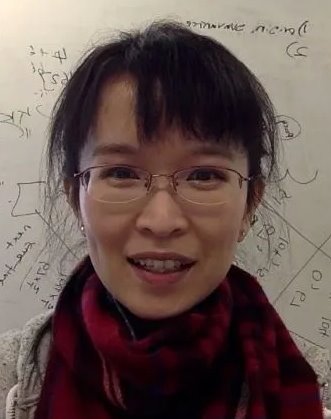
Yanyan Zhuang, Ph.D., is part of a team that is trying to make medical Artificial intelligence (AI) systems and machine learning more trustworthy.
This fall, Zhuang received funding as a co-principal investigator with the University of California-Los Angeles for their innovative project titled “A Data Provenance Framework for Medical Machine Learning Research,” sponsored by the National Science Foundation (NSF). The research looks at one of the most challenging issues in healthcare technology: ensuring that medical data used as input into AI models and used to train AI models remains secure and verifiable throughout its lifecycle.
“This project tracks how medical data is used throughout its lifetime, finds machine learning models that were trained on corrupt datasets, and efficiently unlearns and removes compromised data points without retraining,” Zhuang explained.
The research aims to protect AI systems from adversarial data poisoning while maintaining patient privacy and performance for medical researchers.
“Unlike static datasets, clinical notes and images are often unstructured, dynamically updated, and sourced from multiple healthcare providers,” Zhuang said. “Both the removal of compromised data and dynamic updates would result in the full retraining of an ML model.”
All these facts further complicate source data tracking and security enforcement. Addressing these challenges requires novel techniques for safeguarding AI models against adversarial data poisoning, ensuring verifiable data sourcing and implementing privacy-preserving mechanisms. This is all done without compromising the ability of the model to work or incurring high overhead.
For Zhuang, this work is personal and important.
“As someone who has recently gone through a lot of expensive medical treatments, developing robust provenance solutions for medical applications can enhance the trustworthiness and reproducibility of newer discoveries in healthcare while enhancing patient confidence,” she said. “The latter is even more important to me.”
The impact of this research is clear.
“This work directly benefits multi-institutional research collaborations, national health data initiatives, and academic medical research environments, where data is sourced from diverse, distributed, and constantly evolving repositories,” said Zhuang.
Practically, the applications are far reaching–”anywhere medical data is used.”
Zhuang knows this work will directly impact students at UCCS.
“I’m looking to hire new graduate students who will help me implement this work, so this will definitely help UCCS students in a positive way,” she said.
Research outcomes will be shared through publications and outreach events such as Women in Cybersecurity (WiCyS) club events and UCCS Mountain Lion Research Day. Zhuang is the faculty advisor for WiCyS.
Her advice to students?
“Research isn’t about working in isolation in a secluded bubble,” said Zhuang. “Research solves real-world problems and makes a tangible difference in people’s lives. You may feel like your impact is limited, but you’ll never truly know your potential until you give it a try.”
Creativity, Zhuang believes, plays an essential role in scientific breakthroughs.
“Creativity is the source of all breakthroughs, in my opinion,” she said.
She also addresses common misconceptions, that “you need to know everything about X in order to do research in X, which is untrue. In fact, nobody can say they know everything in today’s world.”
Zhuang’s research involves bridging technology, problem-solving and a unique challenge: “To explain a complex problem to people who are not in my field,” she said.
But she perseveres to solve problems that challenge society.
“Our research fosters interdisciplinary collaboration and will train the next generation medical and cybersecurity professionals in responsible data management,” said Zhuang. “We will also develop a lot of open-source tools and educational resources.”
About the UCCS College of Engineering and Applied Science
The College of Engineering and Applied Science enrolls more than 1,700 students and offers 24 engineering and computer science degrees, ranging from bachelor to doctoral. The college is a Department of Homeland Security / National Security Agency Center of Academic Excellence in Cyber Defense and works closely with the National Cybersecurity Center and with more than 250 aerospace and defense, information technology, cybersecurity and engineering organizations in the Pikes Peak region. Learn more about the College of Engineering and Applied Science at UCCS.